
A Retrospective Review of Topical Wound Oxygen as an Adjunct Treatment in Healing Chronic Ulcerations
Matthew Garoufalis, DPM, FASPS, FACFOAM2 • Laith Shaman, DPM1 • Aamir Mahmood, DPM1 Michael Czurylo, DPM1 • Neal Patel, DPM1 • Kelda Beachy, DPM1 • Shayan Alamgir, DPM1 Anna Tien, DPM1 • Justin Goldsmith, DPM1
1: Resident, Foot and Ankle Surgery, Jesse Brown VAMC, Chicago, IL.
2: Director, Foot and Ankle Surgery PMSR/RRA Residency Program, Jesse Brown VAMC Chicago, IL
INTRODUCTION
Topical Wound Oxygen is a modality that utilizes cyclical topical oxygen pressure with non-contact compression that rivals the benefits of hyperbaric oxygen without the hassle and complications. Topical Wound Oxygen has been utilized in challenging chronic ulcerations with or without other advanced therapies. This study is a retrospective chart review analyzing healing among patients with chronic ulcerations of various etiologies in an urban veteran population who were treated with Topical Wound Oxygen.
METHODS
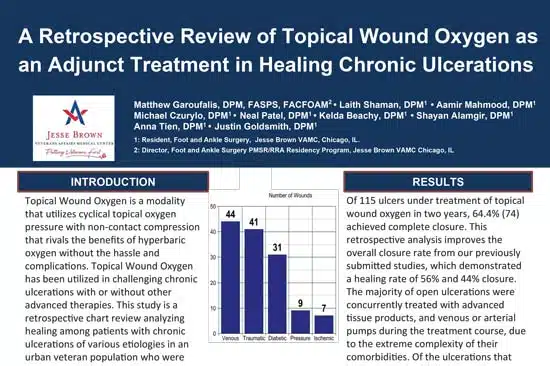
This is a two year retrospective review which includes 71 patients with a total of 115 wounds from a Veterans Affairs hospital that were prescribed cyclical pressurized Topical Wound Oxygen (TWO2)* for use at home. Patients with wounds of venous/lymphatic insufficiency were most commonly prescribed the therapy (44), followed by surgical or traumatic wounds (41), diabetic (31), pressure (9) and ischemic ulcers (7). Most patients had concurrent peripheral vascular disease ranging from mild to severe, with or without vascular intervention. Eighteen patients were excluded: eight were lost to follow-up, four discontinued due to development of gangrene to the extremity, four that received amputations with surgical closure, one patient expired, and one discontinued due to sickle cell disease.
RESULTS
Of 115 ulcers under treatment of topical wound oxygen in two years, 64.4% (74) achieved complete closure. This retrospective analysis improves the overall closure rate from our previously submitted studies, which demonstrated a healing rate of 56% and 44% closure. The majority of open ulcerations were concurrently treated with advanced tissue products, and venous or arterial pumps during the treatment course, due to the extreme complexity of their comorbidities. Of the ulcerations that have not reached full closure, the majority have decreased in size since initiation of topical oxygen. To note, although not specifically tested during this study, a number of patients (5) stated they had significant pain relief with the usage of Topical Wound Oxygen device.
CONCLUSION
The continuation of this large retrospective analysis continues to demonstrate that cyclical pressurized Topical Wound Oxygen is a valuable adjunct modality in the treatment of chronic ulcerations. Results show an encouraging closure rate and noted wound improvement on these recalcitrant ulcerations. Further larger Randomized Controlled Trials are in progress to validate these outcomes, including a multicenter, multinational, double-blinded, placebo controlled RCT (NCT02326337) that has just concluded recruitment.